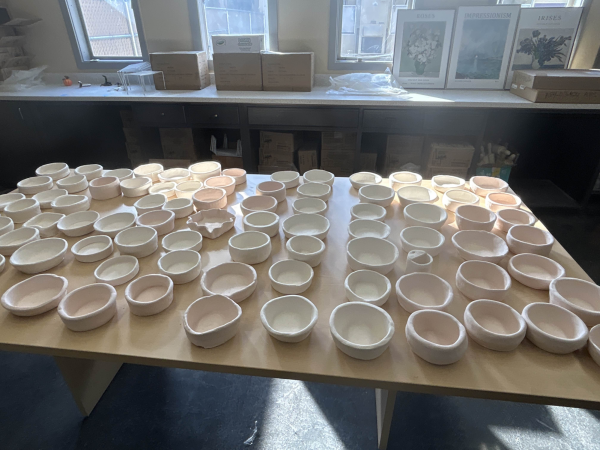
Ceramics is one of the many electives you can take at our school, taught singlehandedly by Colin Apperson. It is a notoriously easy arts and crafts subject that explores creativity and craftsmanship while teaching you how to shape and carve objects out of clay. While some may assume this is just a class to get an easy A grade in, it still requires patience, imagination, and passion. This article serves as a simple showcase describing what an average day in ceramics class looks like and why it would appeal to a wide range of students.
A typical day would usually start the same way, with students lining up outside the classroom as the teacher prepares the lecture. “They come in, put their bags at the side of the classroom, put on their apron, and go to their desk…” Ms. Apperson explains. Davion Ferrara, a student who takes the elective, adds on to this. “Then we sit down and work with the clay, and ten minutes before the bell rings, we clean everything up.” Most of the work in the class is related to pottery, though students may sometimes sketch out what they plan to do for their project.
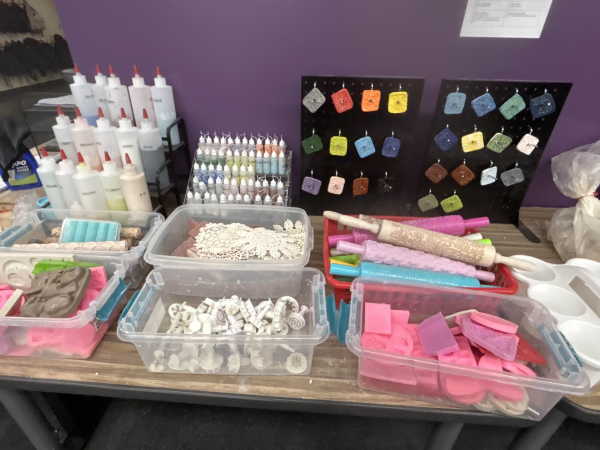
For beginners, ceramics start off small and manageable. Play-Doh is often used at the start of the school year to introduce new students to the basics. As Apperson notes, “It’s similar to clay,” and “Most of the time the students already have experience playing with Play-Doh before.” This would help some students ease up and feel more comfortable with clay. Some students comment that it’s pretty easy to work with clay, making a long tutorial unnecessary. The safety rules are very straightforward, too: “Students are usually told to keep things in their own lane,” as Ms. Apperson puts it. “There isn’t anything that dangerous in the class aside from a few of the tools they use.”
One of the best things about ceramics? Prior art experience isn’t really required. “Nope, not at all!” Apperson says when asked whether students need an artistic background. “You’re just using your hands. Everyone is creative, and you just need to picture something in your head.” Students don’t need years of practice or a ton of experience to enjoy the class. Instead, creativity, imagination, and willingness to try and work hard enough are all that matter most. This is what makes ceramics an accessible and welcoming elective for all students.
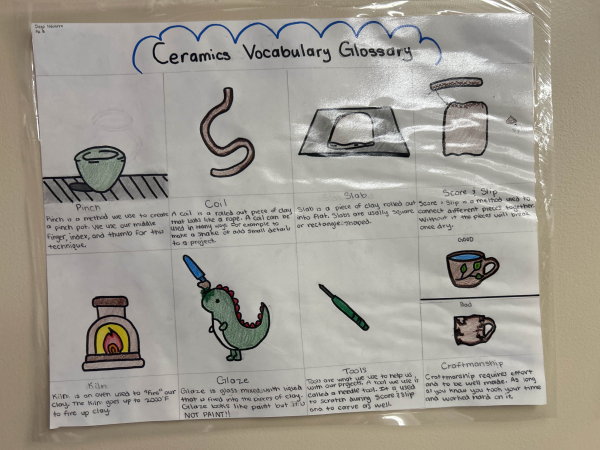
Mistakes are nothing to worry about, either, Ms. Apperson laughs when talking about the fear some students may feel when they first begin handling clay. “Students are really scared to mess something up, but clay is so forgiving. If you cut something and you don’t like it, all you have to do is smudge it out with your thumb, and you can start it again.” Because clay is so easily moldable, some of the pressure to make things “perfect” is taken off. “As I said earlier, it’s a very forgiving art—you don’t have to draw spectacular.” As Apperson puts it.